


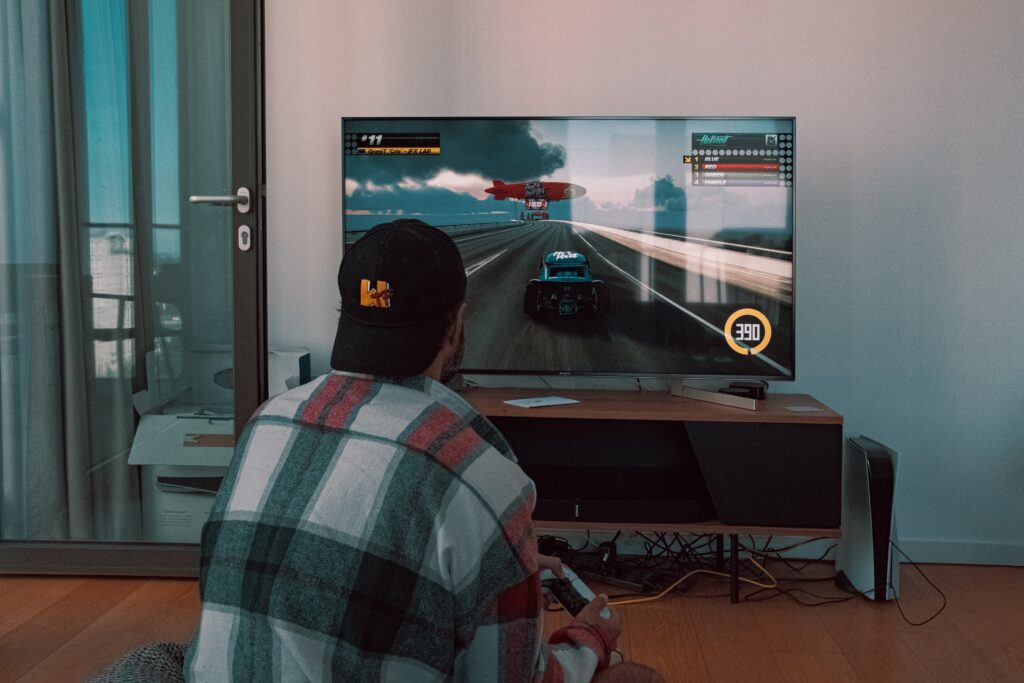
Ready to take your gaming experience to the next level? Look no further – we’ve found the perfect 4K TV for you! As a serious gamer, you know that your setup is only as good as your gear. With so many different TVs on the market, it can be overwhelming to choose the right one. But fear not! We’ve done the research for you. In this guide, we’ll walk you through everything you need to know when purchasing a 4K gaming TV. From screen size and refresh rate/input lag, to picture and audio quality features, we’ve covered it all. By the end of this article, you’ll be a 4K TV expert and ready to make an informed decision about which TV is best for your gaming needs. So grab your controller and let’s dive into the world of 4K TVs for gamers!
Considerations for Choosing a TV for Gaming.
When selecting a television for gaming, it is vital to take into account specific aspects, such as the screen size and refresh rate, which should be given precedence. Bigger screens will help you get the most out of your gaming sessions, and higher refresh rates will provide smoother gameplay. Additionally, try to find a TV with low input lag – this is the delay between when you press a button and the action appearing onscreen – as this can affect your game’s performance. Look for features like HDR and Dolby Vision/Atmos that enhance picture quality and sound; OLED TVs are especially great for gamers as they produce deep blacks and accurate color. Finally, make sure your TV has a “gaming mode” setting that optimizes the response times and dynamic range for fast-paced games. With these features in mind, you can find the perfect 4K gaming TV to take your gaming experience to the next level!
The Best 4K TVs for Gamers
If you’re looking for the best 4K TVs for gaming, there are some key features to consider. Look for a large screen size that will provide an immersive experience when playing your favorite games. High refresh rates will also help provide smooth gameplay and reduce input lag. Opting for televisions with HDR and Dolby Vision/Atmos can enhance picture quality and sound, while OLED TVs offer deep blacks and accurate colors. Additionally, make sure your TV has a “gaming mode” setting that optimizes response times and dynamic range for fast-paced games. With these features in mind, you can find the perfect 4K gaming TV to take your gaming experience to the next level!
Screen Size
When choosing the right 4K TV for gaming, screen size is one of the most important factors to consider. Larger screens offer an immersive experience while playing video games, and they can also accommodate multiple players in multiplayer games. Larger screen size also allows you to benefit from a wider field of view in racing or shooter games. However, it’s important to remember that bigger isn’t always better; make sure the screen size fits your living space and you can comfortably view it from your gaming chair or couch. Ultimately, choosing a screen size that best suits your needs will ensure an enjoyable gaming experience!
What Size TV Should You Get?
When considering the size of a TV for gaming, it’s important to take into account the size of your living space, how close you will be sitting to the screen, and how many players will be playing at one time. Generally, larger screens provide an immersive experience and can accommodate multiple players in multiplayer games.
However, if you don’t have enough space or are too close to the screen, a larger size may not be ideal. Conversely, if you sit too far away from a smaller screen, details won’t appear as clear and crisp. It is recommended that gamers choose a TV size relative to their seating distance; typically somewhere between 40-65 inches should suffice. Ultimately, it’s best to determine what fits your needs and budget before making any decisions on TV size.
Smaller vs Larger TVs: Pros & Cons
When it comes to choosing the best size TV for gaming, there are pros and cons of both smaller and larger screen sizes. Smaller screens are typically more affordable than their larger counterparts, making them a great option for gamers on a budget. Additionally, they’re easier to move around and don’t take up as much space in your living room. On the other hand, larger TVs provide an immersive experience that can accommodate multiple players in multiplayer games.
However, they can be expensive and may require you to sit too close to the screen. Ultimately, it’s important to think carefully about what size fits your needs before purchasing a new TV for gaming. Consider the size of your living space, how many people will be playing at one time, and how far away you’ll be sitting from the screen when making your decision.
Recommended Screen Sizes by Gaming Genre
When it comes to gaming, not all genres are created equal. Different types of video games require different screen sizes in order to provide the best gaming experience. First-person shooters, for example, typically require a larger screen in order to take advantage of the wide field of view offered by the game. On the other hand, turn-based strategy games can often be enjoyed on smaller screens since they don’t rely as heavily on visuals.
Racing games also benefit from larger screens since they provide more space to take in all the details of the environment while driving at high speeds. Ultimately, it’s important to consider what type of game you’ll be playing and how large your living space is before choosing a TV size for your gaming setup. Doing so will ensure that you get an optimal gaming experience every time you sit down to play.

Refresh Rate & Input Lag
Refresh rate and input lag are two important factors to consider when evaluating 4K TVs for gaming. Refresh rate is the number of times per second that a TV can draw or refresh an image, measured in Hz (Hertz). A higher refresh rate means smoother, more fluid motion with less blurring or tearing. It also means faster response times from the TV, which can make all the difference in fast-paced games. Input lag is the amount of time it takes for your controller inputs to be registered onscreen, measured in milliseconds (ms).
Also, lower input lag is critical for competitive gaming since it reduces the “delay” between pressing buttons and seeing them take effect on screen. When shopping for a 4K TV, look for models with at least 120Hz refresh rates and lower than 15ms input lags—both of these features will ensure a smooth and enjoyable gaming experience.
Refresh Rates and Frames per Second Explained
Refresh rate and frames per second (FPS) are two important factors when it comes to gaming on a 4K TV. Refresh rate is the number of times per second that a TV can draw or refresh an image, measured in Hz (Hertz). A higher refresh rate means smoother, more fluid motion with less blurring or tearing. FPS, on the other hand, is the number of images a video game can generate each second. Higher FPS generally results in more realistic graphics, as well as improved responsiveness for fast-paced games. When shopping for a 4K TV for gaming, look for models with at least 120Hz refresh rates and higher than 60 FPS. Both of these features will ensure an immersive gaming experience with no lag or choppy visuals.
Input Lag and Response Time Explained
Input lag and response time are two important factors to consider when shopping for a 4K TV for gaming. Input lag is the amount of time it takes for your TV to respond to commands from your console or controller, measured in milliseconds (ms). A lower input lag will ensure smooth control of your games. Response time is the amount of time it takes for individual pixels on the screen to change colors, also measured in ms. Low response times mean faster transitions between colors with less blurring, making it ideal for fast-paced games like first-person shooters or fighting games. When shopping for a 4K TV for gaming, look for models that have lower than 15ms input lag and 5ms or lower response time. This will allow you to enjoy an immersive gaming experience with accurate control and sharp visuals.
Features to Look for in Terms of Refresh Rate and Input Lag
Refresh rate and input lag are both important features to consider when shopping for a 4K TV for gaming. Refresh rate measures the number of times per second that the image on the screen refreshes itself, expressed in hertz (Hz). Higher refresh rates result in smoother motion, so look for TVs with refresh rates of 120 Hz or higher. Input lag is the amount of time it takes for your TV to respond to commands from your controller, measured in milliseconds (ms).
In addition, lower input lag will ensure smooth control of your games, so aim for TVs with an input lag lower than 15ms. Some TVs also offer variable refresh rate technology such as AMD FreeSync and NVIDIA G-SYNC which can reduce stutter and screen tearing. Look out for these features when choosing a gaming TV to get the most immersive experience possible.
This article provides an explanation of Variable Refresh Rate (VRR) technologies.
Variable Refresh Rate (VRR) technology is a must-have feature for gamers when selecting a 4K TV. VRR can reduce screen tearing and stuttering, providing you with an improved gaming experience. It works by synchronizing the refresh rate of the TV with the frame rate of the game being played in order to keep them in sync. This helps to ensure that images are always shown at the same speed as they were intended and can eliminate any lag experienced by players.
Additionally, VRR can also reduce energy consumption and heat output from the TV, making it more efficient. When shopping for a 4K TV for gaming, be sure to look out for TVs that support AMD FreeSync or NVIDIA G-SYNC as these technologies will provide you with smoother gaming action and an enhanced experience overall.
NVIDIA G-Sync Explained
NVIDIA G-Sync is a technology developed by NVIDIA to help provide gamers with an enhanced gaming experience. It works by synchronizing the refresh rate of the monitor with the frame rate of the game being played. This helps to eliminate any lag experienced by players and reduces screen tearing and stuttering. NVIDIA G-Sync also helps to reduce energy consumption and heat output from the monitor, making it more efficient.
Additionally, NVIDIA G-Sync provides gamers with more accurate color reproduction for games as well as support for HDR content and variable refresh rates, allowing for smoother visuals in fast-paced games. When shopping for a 4K TV or monitor for gaming, be sure to look out for those that support NVIDIA G-Sync as this will give you a superior gaming experience overall.
FreeSync Explained HDMI 2.1 Explained
FreeSync is a technology developed by AMD to provide gamers with an enhanced gaming experience. It works by synchronizing the refresh rate of the monitor with the frame rate of the game being played, helping to eliminate any lag experienced by players and reducing screen tearing and stuttering. FreeSync also helps to reduce energy consumption and heat output from the monitor, making it more efficient.
Additionally, FreeSync provides gamers with support for variable refresh rates, allowing for smoother visuals in fast-paced games. When shopping for a 4K TV or monitor for gaming, be sure to look out for those that support FreeSync as this will give you a superior gaming experience overall.
HDMI 2.1 Explained
HDMI 2.1 is an updated version of HDMI which has been designed to provide gamers with an even better gaming experience than before. It supports higher resolutions of up to 10K at 60Hz as well as increased bandwidth of up to 48Gbps which allows for faster data transfer rates and greater picture clarity.
Additionally, HDMI 2.1 supports Variable Refresh Rate (VRR) and Auto Low Latency Mode (ALLM), both of which help reduce input lag when playing video games on compatible devices. Furthermore, it also allows for eARC compatibility meaning that high-quality audio can be delivered through one cable instead of multiple cables required with earlier versions of HDMI. When shopping for a 4K TV or monitor for gaming, make sure you look out for those that support HDMI 2.1 as this will give you an even better gaming experience than before!
Picture Quality Features To Look For
When it comes to finding the best 4K TVs for gaming, picture quality is one of the most important factors to consider. There are several features to look out for when shopping for a 4K TV or monitor, such as HDR and Dolby Vision, deep blacks and perfect black, accurate color reproduction, dynamic range, and contrast ratio.
HDR stands for High Dynamic Range and is a feature that helps improve the overall picture quality by increasing the range of colors and brightness available on the screen. It also helps to create more vivid images with better contrast between light and dark tones. Dolby Vision is a similar feature that enhances contrast and color accuracy even further.
Deep blacks refer to how dark an image can get before it appears washed out or grey. Perfect black refers to how close an image can be to true black without any loss of detail or vibrancy in color. Accurate color reproduction ensures that images appear lifelike with no discoloration or oversaturation.
Dynamic range refers to the amount of detail visible in both bright and dark areas of an image while contrast ratio indicates how much brighter whites are than blacks within a given display’s native setting. Both of these features help ensure that you get the most out of your gaming experience with plenty of detail visible across all levels of brightness.
Audio Quality Features To Look
When it comes to audio quality, there are several features to consider in order to make sure you get the best possible sound experience out of your 4K TV. Dolby Atmos and surround sound are two features that can help provide a more immersive gaming experience by creating realistic 3D audio environments with deep bass and crystal clear highs.
Additionally, many TVs come with Audio Output Ports which allow you to connect external speakers or headphones for an even better sound experience. It’s important to pay attention to the type of ports available on your TV as some may not be compatible with certain types of audio devices. Finally, if you plan on playing fast-paced games or watching movies with lots of action sequences, it’s important to check the TV’s audio output capabilities and make sure it can handle high levels of sound output without distortion or clipping.
Other Important Considerations
When shopping for a 4K TV for gaming, there are a few other important considerations to keep in mind. Many TVs come with a Game Mode feature which optimizes the picture and sound settings of the TV specifically for playing video games. This can help reduce input lag as well as improve response times and frame rates. Additionally, many TVs also come with pre-set modes such as Movie Mode, Sports Mode, and more that can help you get the best possible picture quality depending on what type of content you’re watching.
Finally, if you plan on streaming content from various sources such as Amazon Prime Video or Netflix, it’s important to make sure your TV is compatible with the desired smart TV platform. Each platform has its own unique features and benefits so it’s important to do some research before making your purchase. Google TV, Android TV, Roku, and WebOS are all popular options that offer plenty of apps and services to choose from.
Summary & Conclusion
When shopping for a 4K TV for gaming, it’s crucial to consider important factors such as refresh rate, deep blacks, dynamic range, and accurate color to ensure an optimal gaming experience. Additionally, many TVs come with a Game Mode feature as well as pre-set modes that can help improve your viewing experience depending on what type of content you’re watching. Finally, make sure to research the different smart TV platforms available to ensure compatibility with all of your favorite streaming services. By considering all of these factors, you can be sure to find the perfect 4K TV for an immersive and enjoyable gaming experience.


More Stories
Benefits of Using Computers
Popular Comuputer Brand
How to Protect Your Computer from Cyber Threats and Viruses